

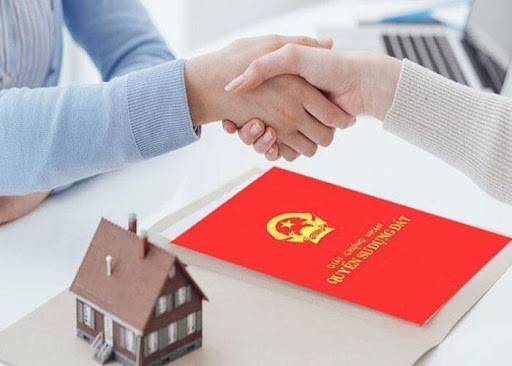
As cross-border family relationships become increasingly common, it is not unusual for foreign nationals or overseas Vietnamese to inherit land use rights in Vietnam from relatives. However, inheriting land use rights does not necessarily mean that the heir may obtain a Land Use Right Certificate (“LURC”), commonly referred to as a “Red Book”.
Under the Land Law 2024, certain categories of foreign heirs may inherit the economic value of land but are not permitted to hold land use rights in their own name. This distinction creates important legal and practical considerations for estate planning and inheritance matters involving foreign beneficiaries.
1. Who Is Not Eligible to Obtain a Land Use Right Certificate?
Pursuant to Article 44.3 of the Land Law 2024, where all heirs are:
- Foreign nationals; or
- Overseas Vietnamese who are not eligible to own residential housing associated with land use rights in Vietnam,
the heirs may not be issued a Land Use Right Certificate or ownership certificate for assets attached to land.
Although Vietnamese law recognizes the right of such individuals to inherit property, it restricts their ability to become registered land users.
2. What Rights Do Foreign Heirs Have?
The inability to obtain a Land Use Right Certificate does not mean that the inheritance rights are entirely extinguished.
Instead, the law allows foreign heirs to realize the value of the inherited property through several mechanisms.
Right to Transfer the Inherited Land Use Rights
A foreign heir may enter into a transfer agreement as the transferor of the inherited land use rights.
The transferee must be a person or entity eligible to receive land use rights under Vietnamese land legislation.
Through this mechanism, the heir may convert the inherited asset into monetary value.
Right to Donate the Land Use Rights
The heir may also donate the inherited land use rights to an eligible recipient under Vietnamese law.
In such circumstances, the foreign heir may execute the donation agreement as the donor, even though he or she is not entitled to receive a Land Use Right Certificate.
Right to Register the Inheritance in the Cadastral Records
If the heir has not yet transferred or donated the inherited property, the heir (or an authorized representative) may submit inheritance documents to the land registration authority for recording in the cadastral records.
This registration serves as formal recognition of the inheritance claim, although it does not confer full land use rights.
3. Cases Involving Both Domestic and Foreign Heirs
In practice, estates often involve multiple heirs, some of whom are eligible to hold land use rights while others are not.
Under Article 44.4 of the Land Law 2024, where the inheritance has not yet been divided, all heirs may jointly register the inheritance with the land registration authority.
Following the division of the estate, Land Use Right Certificates may be issued to eligible heirs, while the portions inherited by ineligible foreign heirs must be handled through transfer or donation in accordance with the law.
4. Practical Considerations and Legal Risks
Foreign heirs should be aware that delaying action may create unnecessary legal risks.
Where inherited land remains unregistered or unresolved for an extended period, disputes may arise among family members or third parties. In addition, unresolved ownership issues may complicate compensation procedures if the State subsequently acquires the land.
Furthermore, because foreign heirs cannot obtain a Land Use Right Certificate, they are generally unable to mortgage, lease, or otherwise commercially exploit the inherited land.
For these reasons, foreign beneficiaries should promptly assess their legal status and determine the most appropriate course of action after inheriting land use rights in Vietnam.
5. Recommended Approach
As a practical matter, foreign heirs should first determine whether they qualify as overseas Vietnamese eligible to own residential housing in Vietnam, as this status may significantly affect their rights.
If a Land Use Right Certificate cannot be issued, the heir should consider registering the inheritance with the cadastral authority as soon as possible to preserve legal interests.
Thereafter, the heir may transfer the inherited land to an eligible individual or organization, or donate the property to a qualified family member, depending on the family’s objectives and succession plan.
6. Conclusion
Vietnamese law recognizes the inheritance rights of foreign nationals and overseas Vietnamese with respect to land use rights. However, in certain circumstances, the law limits those rights to the economic value of the inherited property rather than allowing direct ownership or registration of land use rights.
Accordingly, foreign heirs should seek legal advice at an early stage to ensure compliance with the Land Law 2024 and to preserve the value of inherited assets through appropriate transfer, donation, or registration procedures.
CONTACT LEGAL CONSULTANT:
TLA Law is a leading law firm with a team of highly experienced lawyers specializing in criminal, civil, corporate, marriage and family law, and more. We are committed to providing comprehensive legal support and answering all your legal questions. If you have any further questions, please do not hesitate to contact us.
1. Lawyer Vu Thi Phuong Thanh, Ha Noi Bar Association
Email: vtpthanh@tlalaw.vn
2. Lawyer Tran My Le, Ha Noi Bar Association
Email: tmle@tlalaw.vn
Nguyen Thuy Duong