

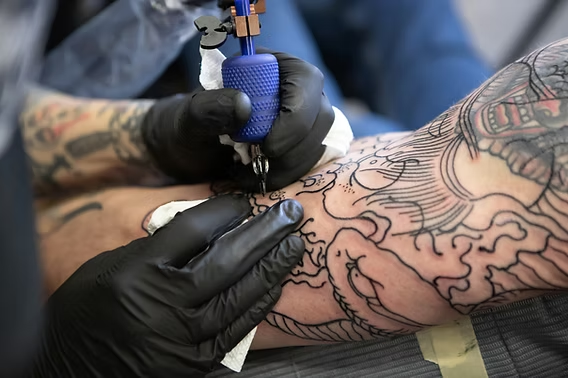
As tattoos continue to gain mainstream acceptance and commercial value, questions surrounding copyright ownership in tattoo designs have become increasingly relevant. While Vietnamese intellectual property laws do not specifically regulate tattoos, the issue raises an important legal question: who owns the copyright in a tattoo—the tattoo artist who created the design, or the individual who bears the tattoo?
Although there is no express statutory provision addressing tattoos, existing copyright principles under Vietnamese law provide useful guidance for determining ownership and the scope of protection available.
1. Can a Tattoo Be Protected by Copyright?
Under the Law on Intellectual Property of Vietnam, copyright protection extends to original literary, artistic, and scientific works that are fixed in a tangible form.
A tattoo may potentially qualify for copyright protection if it demonstrates sufficient originality and creative expression. In practice, highly artistic and customized tattoo designs are more likely to be considered copyrightable works than common symbols, simple words, names, slogans, or widely used images.
From a legal perspective, a tattoo shares many characteristics with an applied art work, as it is expressed through lines, colors, composition, and artistic creativity. Accordingly, original tattoo designs may be eligible for copyright protection upon creation, regardless of whether they have been registered.
2. Who Is the Copyright Owner?
As a general rule, Vietnamese copyright law recognizes the creator of a work as its author.
In the context of tattoos, the tattoo artist is typically the individual who contributes the creative effort, artistic skill, and intellectual input necessary to produce the final design. Therefore, absent any agreement to the contrary, the tattoo artist is generally regarded as the initial copyright owner of the tattoo artwork.
The fact that the tattoo is permanently inked onto another person’s body does not automatically transfer copyright ownership to that individual.
However, ownership may differ in certain circumstances. For example, where a tattoo artist creates the work as part of his or her employment duties for a tattoo studio, the economic rights may belong to the employer, subject to the terms of the employment arrangement. Likewise, the parties may expressly agree in writing that copyright ownership will be assigned to the client.
3. Practical and Legal Challenges
The application of copyright law to tattoos raises a number of unique legal issues.
First, tattoos are inseparable from the human body. Unlike traditional artistic works, a tattoo cannot easily be separated from its physical medium, creating uncertainty regarding the enforcement of copyright and licensing rights.
Second, tension may arise between the copyright interests of the tattoo artist and the personal rights of the tattooed individual. While the artist may own the copyright in the artwork, the individual retains autonomy over his or her own body. This can lead to difficult questions regarding photography, commercial exploitation, modification, or removal of the tattoo.
Third, disputes may arise where a tattoo is reproduced for commercial purposes, such as in advertising campaigns, merchandise, films, video games, or other media. Internationally, several high-profile cases have demonstrated the growing commercial significance of tattoo-related copyright claims.
4. Risk Management and Best Practices
Given the absence of specific legal guidance in Vietnam, tattoo artists and clients should consider addressing copyright issues contractually from the outset.
For tattoo artists, written agreements should clearly define ownership of copyright, permitted uses of the tattoo design, and any licensing arrangements. Such agreements can help protect valuable artistic works and reduce the risk of future disputes.
For clients, obtaining express permission or a copyright assignment may be advisable where the tattoo is expected to be used for commercial purposes beyond personal display.
Clear contractual arrangements are particularly important for custom-designed tattoos, celebrity tattoos, or tattoos intended to form part of branding, advertising, or other commercial activities.
Conclusion
Although Vietnamese law does not specifically regulate copyright in tattoos, existing copyright principles suggest that the tattoo artist will generally be regarded as the initial copyright owner of an original tattoo design. The individual bearing the tattoo acquires ownership of his or her body, but not necessarily the copyright in the artwork itself.
As tattoos increasingly intersect with commercial activities and intellectual property rights, both artists and clients should proactively address ownership and usage rights through written agreements to minimize legal uncertainty and potential disputes.
CONTACT LEGAL CONSULTANT:
TLA Law is a leading law firm with a team of highly experienced lawyers specializing in criminal, civil, corporate, marriage and family law, and more. We are committed to providing comprehensive legal support and answering all your legal questions. If you have any further questions, please do not hesitate to contact us.
1. Lawyer Vu Thi Phuong Thanh, Ha Noi Bar Association
Email: vtpthanh@tlalaw.vn
2. Lawyer Tran My Le, Ha Noi Bar Association
Email: tmle@tlalaw.vn
Nguyen Thuy Duong