

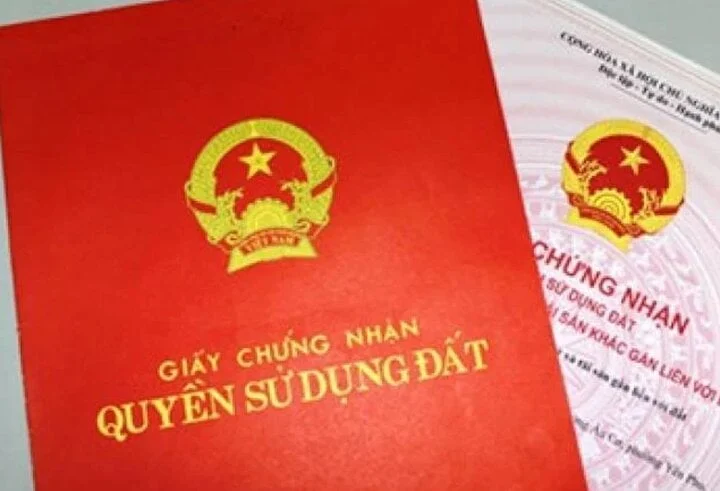
In practice, many individuals still buy and sell land using handwritten agreements instead of formal notarized contracts. This often occurs due to convenience, cost-saving considerations, or personal trust between the parties. However, under Vietnamese law, such transactions may expose the parties to significant legal risks, including the possibility that the transaction is declared invalid or that the buyer loses the right to use the land.
1. Risk of the Transaction Being Declared Invalid
One of the most serious risks associated with handwritten land transfer agreements is that the contract may be declared invalid due to non-compliance with formal requirements.
According to Article 129 of the Civil Code 2015 of Vietnam, a civil transaction that violates mandatory form requirements may be declared invalid, except in limited circumstances where:
- At least two-thirds of the contractual obligations have already been performed, and
- A party requests the court to recognize the validity of the transaction.
In practice, however, meeting these conditions and obtaining judicial recognition can be difficult. If the transaction is declared invalid, the legal consequences generally include:
- The parties must restore the original status by returning what they have received.
- The buyer may be required to return the land to the seller.
- The recovery of the purchase price or compensation for damages may become complex and time-consuming.
2. Inability to Register Changes in Land Use Rights
Under Article 503 of the Civil Code 2015 of Vietnam, the transfer of land use rights only becomes legally effective upon registration with the competent authority.
When a transaction is conducted solely through a handwritten document, the transferee may encounter the following difficulties:
- Inability to register changes in land use rights
- Inability to transfer ownership of the land use right certificate
- Inability to obtain a new land use right certificate
Consequently, even if the buyer has paid the full purchase price, they may lack a legally recognized basis to assert ownership or use rights over the land.
3. Risk of Administrative Penalties
In addition to the risk of invalidation, the parties involved may also face administrative sanctions for conducting land transactions in violation of statutory requirements.
Under the Decree No. 123/2024/ND-CP of Vietnam, penalties may include:
- A fine ranging from VND 30 million to VND 50 million for individuals transferring land without satisfying legal conditions.
- For organizations, fines may range from VND 60 million to VND 100 million.
- The transferee may be required to return the land and implement remedial measures imposed by the competent authority.
Accordingly, handwritten land transactions may lead not only to legal uncertainty but also to significant financial liabilities.
4. Risks in Transactions with Third Parties
In some cases, a buyer who acquires land through a handwritten agreement may subsequently:
- Resell the land,
- Mortgage the land for loans, or
- Transfer the land to another party.
However, if the original transaction is later declared invalid, subsequent transactions may also be invalidated.
According to guidance in Official Dispatch No. 02/TANDTC-PC of the Supreme People’s Court of Vietnam, if the third party is not considered a bona fide purchaser, subsequent transactions may also be declared invalid.
This situation may result in:
- Multi-party disputes over the same parcel of land
- Prolonged litigation
- Significant financial losses for later buyers.
5. Risk of Disputes and Difficulty in Protecting Legal Rights
Handwritten agreements often lack the formal legal safeguards required in property transactions. As a result, disputes are relatively common.
Difficulty in Proving Ownership Rights
Handwritten agreements may:
- Lack detailed legal information about the land
- Not be certified by competent authorities
- Be easily challenged regarding authenticity
Limited Judicial Protection
If the contract is declared invalid, it does not create legally enforceable rights and obligations as initially intended by the parties.
Complex Dispute Resolution
According to guidance in Official Dispatch No. 64/TANDTC-PC of the Supreme People’s Court of Vietnam, when a contract is declared invalid, the court must consider multiple factors in resolving the consequences, including:
- The degree of fault of each party
- The value of the property
- The obligations of restitution
Such disputes can take several years to resolve.
Practical Legal Recommendations
To minimize legal risks, individuals involved in land transactions should comply with all statutory procedures.
Preventive Measures
- Ensure that all land transfer agreements are notarized or authenticated.
- Conduct a comprehensive legal due diligence review of the land.
- Verify the planning status, mortgage status, and dispute status of the property.
- Register the change in land use rights immediately after signing the contract.
Solutions if a Handwritten Agreement Already Exists
If a handwritten agreement has already been used, the parties should consider:
- Executing a new legally compliant land transfer contract.
- Having the contract notarized or authenticated.
- Completing the registration of land use rights transfer with the competent authority.
Prompt action can significantly reduce the risk of future legal disputes.
Conclusion
Purchasing land through handwritten agreements presents substantial legal risks under Vietnamese law. Buyers may face consequences such as:
- The transaction being declared invalid
- Inability to register land use rights
- Administrative penalties
- Prolonged and complex disputes
Therefore, to safeguard their legal interests, parties involved in land transactions should strictly comply with notarization requirements and land registration procedures as required by law.
CONTACT LEGAL CONSULTANT:
TLA Law is a leading law firm with a team of highly experienced lawyers specializing in criminal, civil, corporate, marriage and family law, and more. We are committed to providing comprehensive legal support and answering all your legal questions. If you have any further questions, please do not hesitate to contact us.
1. Lawyer Vu Thi Phuong Thanh, Ha Noi Bar Association
Email: vtpthanh@tlalaw.vn
2. Lawyer Tran My Le, Ha Noi Bar Association
Email: tmle@tlalaw.vn
Nguyen Thuy Duong