

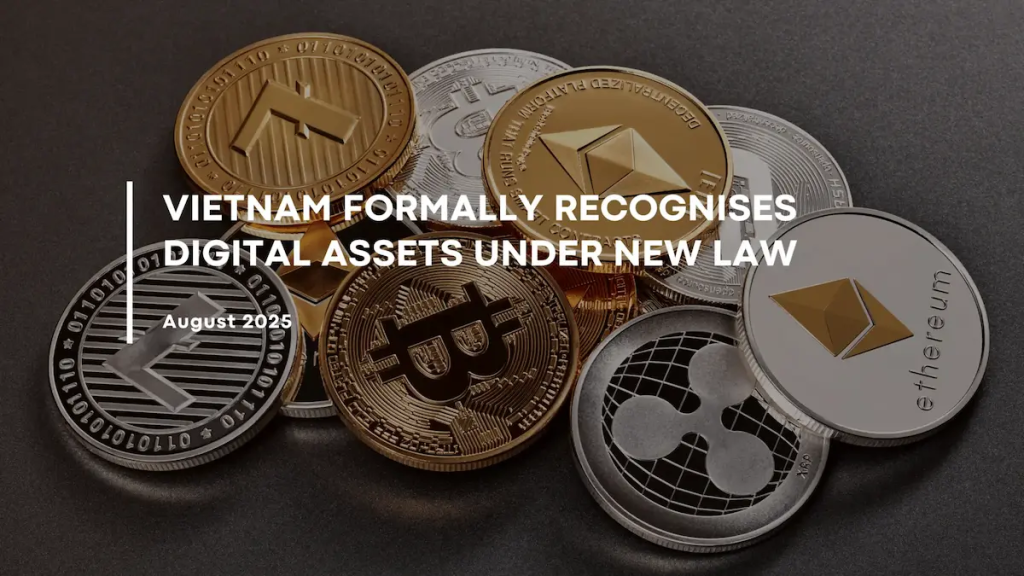
The rapid development of digital technology, particularly blockchain technology, has accelerated the emergence and significant growth of various forms of digital assets. In Vietnam, digital assets are increasingly being used in investment activities, transactions, and wealth accumulation. However, alongside the opportunities that digital assets bring, disputes related to these assets have also become increasingly common and complex.
1. Concept and Classification of Digital Assets under Vietnamese Law
Previously, the concept of assets in cyberspace in Vietnam was often associated with risky terms such as “virtual currency,” and Vietnamese law did not officially recognize digital assets as a legitimate category of property. However, with the introduction of the 2025 Law on Digital Technology Industry (effective from January 1, 2026) and Government Resolution No. 05/2025/NQ-CP dated September 9, 2025 on the pilot implementation of the crypto-asset market in Vietnam, digital assets have now been formally codified and granted a clear legal status.
1.1. Definition of Digital Assets
According to Article 46 of the 2025 Law on Digital Technology Industry (effective from January 1, 2026), digital assets are assets as defined under the Civil Code, represented in the form of digital data, created, issued, stored, transferred, and authenticated by digital technologies in electronic environments. This definition officially recognizes practices that had already existed in reality but had not yet been legally acknowledged.
1.2. Classification of Digital Assets
The 2025 Law on Digital Technology Industry classifies digital assets based on one or more criteria such as purpose of use, technology, and other factors. Specifically, digital assets include:
- Virtual assets in electronic environments: A type of digital asset used for exchange or investment purposes. Virtual assets do not include securities, digital representations of fiat currencies, or other financial assets as regulated under civil and financial laws. Virtual assets are generally controlled by issuers (e.g., in-game currencies) and typically only hold value within a specific community, with limited convertibility into fiat currency.
- Crypto assets: A type of digital asset utilizing encryption technology or other digital technologies with similar functions to authenticate assets during creation, issuance, storage, and transfer. Crypto assets do not include securities, digital representations of fiat currencies, or other financial assets regulated under civil and financial laws. Crypto assets rely entirely on blockchain technology for authentication, with ownership recorded on a global computer network rather than depending on recognition by a traditional third party, except where transactions are conducted through licensed centralized exchanges.
- Other digital assets.
It can therefore be seen that crypto assets are a subset of digital assets.
2. Common Types of Digital Asset Disputes
As digital assets continue to develop and diversify, disputes arising from them have also become increasingly varied, including:
- Disputes over ownership rights of digital assets: This is the most common type of dispute due to the intangible nature of digital assets and the complexity of identifying ownership. Current laws still do not specifically recognize the control of private keys or access rights to electronic wallets as a legally recognized form of possession.
- Disputes relating to digital asset transactions: These include fraud, asset appropriation, transactional misconduct, and technical failures resulting in asset loss.
- Contractual disputes involving digital assets: Arising from agreements for the purchase, lease, lending, or other contracts where digital assets are the subject matter.
- Inheritance disputes concerning digital assets: Issues regarding who is the lawful heir to digital assets upon the owner’s death and how ownership may be transferred to heirs.
- Digital assets in marriage and family disputes: Determining whether digital assets constitute marital common property or separate property during divorce proceedings.
3. Current Legal Framework for Resolving Digital Asset Disputes in Vietnam
Although the 2025 Law on Digital Technology Industry has established a legal foundation for the formation and development of digital assets—thereby creating an important basis for ownership rights, transfer rights, inheritance rights, and dispute resolution—the legal framework and management mechanisms governing this type of asset are still in the process of being finalized and continue to contain significant legal gaps.
Existing Legal Challenges:
- Difficulties in establishing and protecting ownership rights: Vietnamese law has not yet officially recognized “legal possession” through the holding of private keys. This creates a paradox where the holder of a private key has absolute technical control over the asset, but such control does not necessarily equate to lawful ownership. Conversely, legitimate owners who lose control of their private keys often lack legal mechanisms to prove ownership or obtain protection from competent authorities.
- Lack of specific dispute resolution mechanisms: In the event of disputes, there is still no clear legal framework to adequately protect investors.
- Risk management and anti-money laundering concerns: The digital asset market poses risks of fraud, asset misappropriation, money laundering, and tax losses if appropriate legal regulations are not implemented.
- Absence of technical standards and supervisory mechanisms: The lack of modern monitoring and data analysis tools makes it difficult for regulatory authorities to monitor, control, and assess risks associated with emerging digital asset models such as Blockchain, DeFi, and NFTs.
- Difficulties in handling digital assets related to criminal activities: Crypto assets currently remain in a “legal gray area” in Vietnam. Although Resolution No. 05/2025/NQ-CP provides an official definition of crypto assets, it only applies within the pilot market framework. Many virtual currencies such as Bitcoin and tokens have still not been formally recognized as “property” under Vietnamese law. As a result, law enforcement and judicial authorities face difficulties in determining the legal nature, value, and legal grounds for seizure or confiscation. In addition, there are currently no detailed regulations on procedures for the seizure, preservation, and handling of crypto assets during legal proceedings.
CONTACT LEGAL CONSULTANT:
TLA Law is a leading law firm with a team of highly experienced lawyers specializing in criminal, civil, corporate, marriage and family law, and more. We are committed to providing comprehensive legal support and answering all your legal questions. If you have any further questions, please do not hesitate to contact us.
1. Lawyer Vu Thi Phuong Thanh, Ha Noi Bar Association
Email: vtpthanh@tlalaw.vn
2. Lawyer Tran My Le, Ha Noi Bar Association
Email: tmle@tlalaw.vn
Nguyen Thuy Duong