

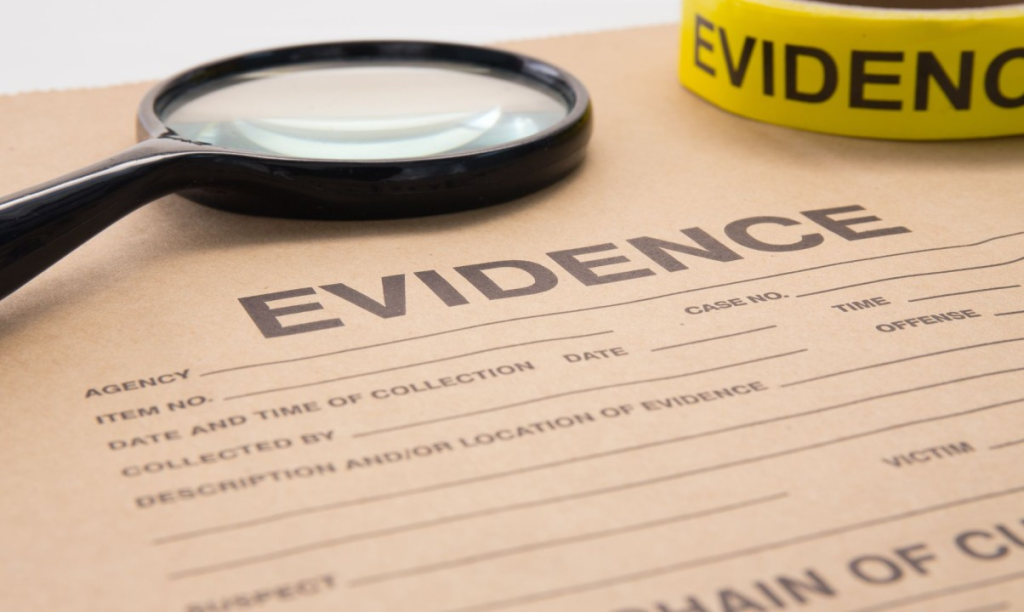
1. Legal Grounds Governing Electronic Evidence and Privacy Rights
The legal validity of audio-visual materials and electronic data is governed by the following legal instruments currently in force:
- 2015 Civil Procedure Code:
- Articles 93 and 94: Define evidence and sources of evidence, including electronic data, readable documents, audio recordings, and visual recordings.
- Article 95: Stipulates the conditions under which evidence is established, including the requirements for audio and video recordings to be recognized as evidence.
- 2015 Criminal Procedure Code (as amended and supplemented):
- Articles 86 and 87: Provide for evidence and sources of evidence in criminal proceedings.
- Article 99: Regulates electronic data in criminal proceedings.
- 2015 Civil Code:
- Article 32: Provides for an individual’s rights to their image.
- Articles 34 and 38: Protect an individual’s honor, dignity, and reputation, as well as the confidentiality of their private life, personal secrets, correspondence, and telephone communications.
- 2023 Law on Electronic Transactions: Articles 10 and 11 provide for the legal validity and evidentiary value of data messages.
- 2025 Law on Personal Data Protection: Governs confidentiality obligations and restrictions on the processing of individuals’ audio and visual data.
2. Can Audio and Video Recordings Be Used as Evidence in Court?
The answer is YES, BUT ONLY IF ALL STATUTORY REQUIREMENTS ARE SATISFIED.
Audio and video recordings are not automatically recognized as evidence merely because they have been submitted to the Court. Pursuant to Article 93 of the 2015 Civil Procedure Code and Article 86 of the 2015 Criminal Procedure Code, a document or material may only be recognized as evidence if it satisfies all three legal attributes:
[1. Objectivity] + [2. Relevance] + [3. Legality]
- Objectivity: The recording must accurately reflect what actually occurred during the conversation and must not have been edited, spliced, falsified, or manipulated through voice imitation or artificial intelligence technology (Deepfake AI).
- Relevance: The content of the audio or video recording must be directly relevant to the facts that need to be established in the case (e.g., a loan transaction, contractual agreement, or act of intimidation).
- Legality: The evidence must be collected in accordance with the procedures and formalities prescribed by law and must not be obtained in violation of legal prohibitions.
3. Key Requirements for Audio and Video Files to Constitute Lawful Evidence
Pursuant to Clause 2, Article 95 of the 2015 Civil Procedure Code, the law specifically stipulates the requirements for establishing evidence in the form of audio-visual materials:
“A document whose contents can be read shall be considered evidence if it is an original or a legally notarized or certified copy, or if it is provided or certified by a competent agency or organization.
A document whose contents can be heard or seen shall be considered evidence if it is submitted together with a written statement by the person possessing such document explaining its origin, where that person personally made the audio or video recording; or a written confirmation by the person who provided the document to the submitting party regarding its origin; or a written document concerning the circumstances surrounding the making of such audio or video recording.”
Accordingly, when submitting an audio or video file to the Court, the litigant must also submit the following accompanying materials:
- A written statement explaining the source and origin: Specify the device used to make the audio or video recording (such as a mobile phone or a particular audio recorder), the time and location of the recording, and the identities of the participants in the conversation.
- A transcript of the recording: A written transcription of the conversation, reproducing the dialogue word for word and bearing the signature of the submitting party, who undertakes legal responsibility for its accuracy.
- The original data storage device: Be prepared to submit the original memory card, recording device, or mobile phone so that the Court may seal it or request an expert examination if the opposing party challenges the authenticity of the recording.
4. Does Secretly Recording a Conversation Violate Privacy Rights and Lead to the Evidence Being Rejected?
This is one of the most controversial issues in judicial practice. Pursuant to Article 38 of the 2015 Civil Code, an individual’s private life and personal secrets are inviolable. However, the distinction between “collecting evidence to protect one’s own rights” and “infringing upon another person’s privacy” may be considered as follows:
4.1. Circumstances in Which the Court May Accept the Recording (Lawful Evidence)
- The recording party is directly involved in the conversation: You are personally speaking with a business partner or debtor. You record the conversation between the two parties to protect your own lawful rights and interests, such as reminding the other party of a debt, confirming the delivery or receipt of goods, or recording a work-related agreement. Such a recording does not necessarily infringe upon the other person’s private life because you are a participant in the conversation.
- Recording unlawful acts in public places: Recording acts such as public officials soliciting improper payments, physical altercations, property destruction, or traffic violations in public places for the purpose of reporting suspected criminal acts.
4.2. Circumstances in Which the Recording May Be Rejected or Its Collection May Violate the Law
- Installing hidden listening or recording devices to monitor others: Secretly installing tracking devices or listening devices in another person’s bedroom, private vehicle, or workplace to collect confidential information about their private life without participating in the conversation. Under the principles governing the collection of evidence, materials obtained through infringement of the right to inviolability of private life will not be recognized by the Court as lawful evidence.
- Editing or manipulating the recording to distort its context: The recording has been cut or edited to retain only statements favorable to one party while removing earlier parts of the conversation, thereby distorting the true nature of the events. If the opposing party requests a forensic examination and the examination reveals evidence of tampering, the entire recording may be excluded.
5. Practical Recommendations for Collecting and Using Audio and Video Evidence
- Preserve the original device and data intact: When recording an important conversation, do not edit, cut, or splice the recording. Make a backup copy on an external hard drive and carefully retain the original mobile phone or recording device used to make the recording.
- Request a Vi bằng to document the conversation: This is considered an effective measure to strengthen the evidentiary value of an audio recording. Bring the recording device to a Bailiff Office and request that a Vi bằng be prepared to record the opening and playback of the audio file and document the contents of the conversation. A Vi bằng prepared by a bailiff may serve as a source of evidence with direct probative value before the Court, without requiring further verification.
- Be prepared to request a forensic examination: If the opposing party firmly denies that “this is not my voice”, proactively submit a request asking the Court to order a forensic examination of the audio recording and voice at the Institute of Forensic Science under the Ministry of Public Security. The party requesting the examination must initially advance the examination costs; however, the losing party will be responsible for bearing such costs after the final judgment is issued.
- Combine audio recordings with other sources of evidence: An audio recording should serve as corroborating evidence. To strengthen the case, it should be combined with other evidence, such as bank statements, contracts, goods delivery and receipt records, text messages, and witness statements.
CONTACT LEGAL CONSULTANT:
TLA Law is a leading law firm with a team of highly experienced lawyers specializing in criminal, civil, corporate, marriage and family law, and more. We are committed to providing comprehensive legal support and answering all your legal questions. If you have any further questions, please do not hesitate to contact us.
1. Lawyer Vu Thi Phuong Thanh, Ha Noi Bar Association
Email: vtpthanh@tlalaw.vn
2. Lawyer Tran My Le, Ha Noi Bar Association
Email: tmle@tlalaw.vn
Nguyen Thuy Duong