

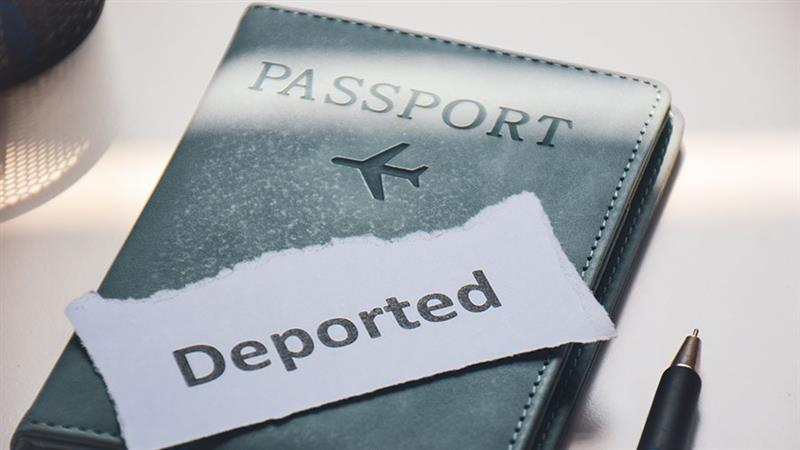
The deportation of foreigners who violate Vietnamese law is one of the important measures to maintain national security, social order, and protect Vietnam’s sovereignty. Legal regulations relating to deportation, temporary detention, and management of foreigners violating the law are specifically prescribed, particularly in relation to foreign investment and foreign labor activities.
I. Concept and Cases Subject to Deportation
1. Concept of Deportation
Deportation is a form of administrative sanction requiring a foreign individual to leave the territory of Vietnam within a specified period as decided by a competent authority. This is a coercive enforcement measure applied to cases involving violations of immigration regulations or other related legal provisions, aimed at ensuring public order and national security.
2. Cases in Which Foreigners May Be Deported
Foreigners may be deported from Vietnam in the following cases:
Administrative Violations
Foreigners committing serious administrative violations may be subject to deportation. In addition to other administrative sanctions such as warnings or monetary fines, foreign violators may also be expelled from Vietnam.
Criminal Offenses
Foreigners convicted under the Criminal Code and sentenced to deportation may be removed from Vietnam. Deportation may serve either as a principal penalty or as an additional penalty depending on the specific circumstances.
Violations of Immigration, Exit, and Residence Regulations
- Remaining in Vietnam after the expiration of the temporary residence period without exiting the country.
- Cases involving national defense, national security, public order, or social safety concerns.
- Providing false information or documents to obtain permission for entry, exit, transit, or residence in Vietnam.
- Taking advantage of entry, exit, transit, or residence for activities against the Socialist Republic of Vietnam or infringing upon the lawful rights and interests of agencies, organizations, or individuals.
- Purchasing, selling, leasing, borrowing, lending, altering, erasing, or falsifying documents used for entry, exit, or residence purposes.
- Failing to declare temporary residence as required or using expired temporary residence certificates, temporary residence cards, or permanent residence cards.
- Using visas for improper purposes, such as entering Vietnam under a tourist visa but engaging in unauthorized employment.
Violations Relating to Foreign Labor
Working in Vietnam without a valid work permit constitutes a legal violation and may result in deportation. Enterprises employing foreign workers without proper work permits are also subject to strict penalties.
II. Deportation Mechanism
1. Authorities Competent to Issue Deportation Decisions
The authority to issue deportation decisions is specifically regulated as follows:
- Immigration authorities may issue compulsory exit decisions for foreigners who remain in Vietnam after the expiration of their temporary residence period.
- The Minister of Public Security and the Minister of National Defense may order compulsory exit on grounds relating to national defense, national security, public order, or social safety.
- Authorities empowered to impose deportation sanctions are determined in accordance with Clause 6, Point d Clause 7, and Clause 9 Article 8 of Decree No. 189/2025/ND-CP dated July 1, 2025, detailing the Law on Handling Administrative Violations regarding sanctioning authority.
2. Deportation Procedures
Government Decree No. 59/2026/ND-CP provides detailed regulations on deportation sanctions, temporary detention measures, escort procedures for administrative violators, and the management of foreigners violating Vietnamese law during the deportation process.
3. Rights and Obligations of Deported Persons
Under Article 7 of Decree No. 59/2026/ND-CP, persons subject to deportation sanctions are entitled to the following rights:
- To be informed of the reasons for deportation and receive the administrative sanction decision imposing deportation at least 48 hours prior to enforcement.
- To contact and notify the diplomatic mission or consular authority of their country of nationality.
- To request the assistance of an interpreter when working with competent authorities.
- To request reconsideration of the deportation decision in accordance with the law.
- To enjoy the regimes prescribed under Decree No. 65/2020/ND-CP dated June 10, 2020 regarding the management and treatment of persons staying at accommodation facilities while awaiting departure.
- To carry lawful personal property out of Vietnam.
- To lodge complaints or denunciations in accordance with the law.
Persons subject to deportation are obligated to fully comply with the deportation decision, except where the administrative sanction consists primarily of a monetary fine with deportation imposed as an additional penalty.
4. Postponement of Deportation Enforcement
Foreigners who are suspects, defendants, or involved parties in legal proceedings may have deportation temporarily postponed in cases of serious illness, natural disasters, epidemics, war, or where the receiving country has not yet agreed to accept them.
III. Relation to Foreign Investment and Foreign Labor
1. Impact on Foreign Investment
The deportation of foreigners violating Vietnamese law may affect the investment environment. To ensure a safe and transparent investment climate, competent authorities have strengthened the management of foreigners from entry procedures through residence and operational activities in Vietnam.
Foreign-invested enterprises must strictly comply with legal regulations concerning the employment of foreign workers and ensure timely and accurate declaration of relevant information.
2. Impact on Foreign Labor
Foreign workers employed in Vietnam are required to possess valid work permits. Those working without proper permits may be subject to deportation.
Provincial and municipal police authorities recommend that foreigners always carry lawful residence and labor documents. Enterprises and organizations employing foreign workers should:
- Carefully verify the immigration status, visa, and work permit validity of foreign employees.
- Refrain from employing undocumented or illegal workers.
- Update employee records whenever there are changes in personal information such as passport numbers or residential addresses.
- Fully comply with procedures for sponsoring visas and obtaining work permits in accordance with legal regulations.
Any acts of harboring, employing, or assisting foreigners in illegal residence or unlawful employment may result in severe penalties, including administrative sanctions, suspension or revocation of business licenses, or criminal prosecution depending on the seriousness of the violation.
CONTACT LEGAL CONSULTANT:
TLA Law is a leading law firm with a team of highly experienced lawyers specializing in criminal, civil, corporate, marriage and family law, and more. We are committed to providing comprehensive legal support and answering all your legal questions. If you have any further questions, please do not hesitate to contact us.
1. Lawyer Vu Thi Phuong Thanh, Ha Noi Bar Association
Email: vtpthanh@tlalaw.vn
2. Lawyer Tran My Le, Ha Noi Bar Association
Email: tmle@tlalaw.vn
Nguyen Thuy Duong