

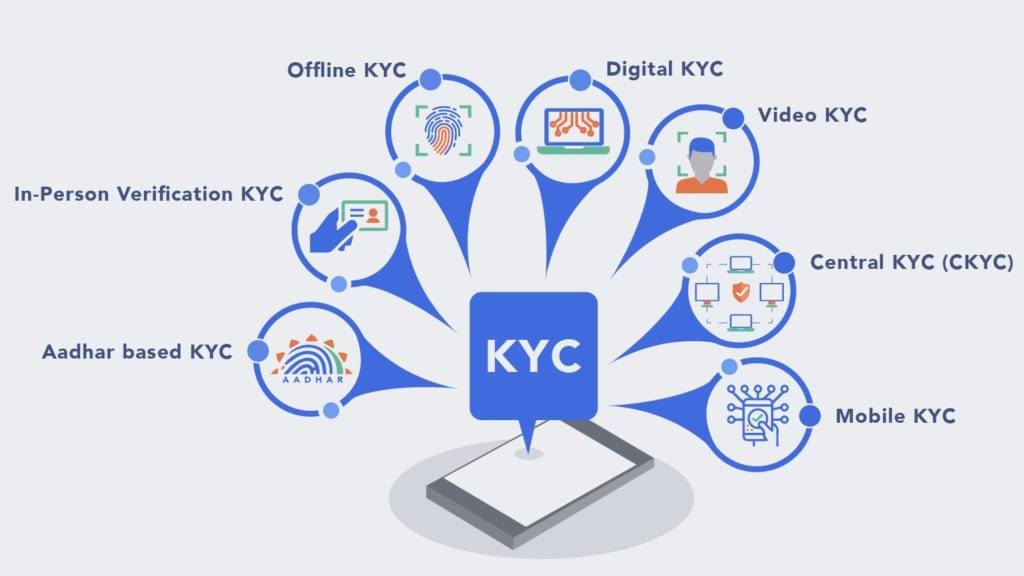
Customer identification, commonly known as KYC (Know Your Customer), is a mandatory and highly important process in the banking and financial sector. This process not only enables financial institutions to identify their customers, but also plays a crucial role in preventing money laundering, terrorist financing, and other financial fraud activities, thereby ensuring the safety and transparency of the national financial system.
1. What is KYC?
KYC, short for “Know Your Customer,” refers to the process by which banks and financial institutions collect, verify, and identify customer information when opening accounts and throughout the course of transactions. The primary objective of KYC is to ensure that customers are genuine individuals while enabling institutions to manage and monitor their transactions in order to prevent fraud, corruption, money laundering, and terrorist financing.
KYC generally includes the following core procedures:
- Customer Identification: Collecting customer information and verifying customer data, typically during the account registration process.
- Customer Verification: Comparing the information provided by customers with valid government-issued identification documents.
- Customer Assessment: Analyzing customer information to assess potential risks, including both Simplified Due Diligence (SDD) and Enhanced Due Diligence (EDD) for identifying suspicious or unlawful financial activities.
2. Legal Framework Governing KYC for Bank Accounts in Vietnam
In Vietnam, KYC is a mandatory legal requirement applicable to all licensed financial institutions providing services to customers. Key legal regulations include the following:
2.1. Law on Anti-Money Laundering No. 14/2022/QH15
The 2022 Law on Anti-Money Laundering, effective from March 1, 2023, replaced the 2012 Law on Anti-Money Laundering and introduced numerous important amendments and additions regarding KYC obligations.
Customer Due Diligence Obligations
Under Clause 2, Article 9 of the 2022 Law on Anti-Money Laundering, banks are required to conduct customer identification in the following cases:
- When customers open accounts or establish relationships with banks for the first time.
- The Law supplements customer identification requirements to align with current legislation and recommendations of the FATF (Financial Action Task Force).
- For individual customers, additional information such as Citizen Identification Card numbers or personal identification numbers must be collected. The Law also specifically regulates information requirements for:
- Foreign nationals residing in Vietnam,
- Non-resident foreign nationals,
- Individuals holding two or more nationalities,
- Stateless persons.
- Reporting entities may access information from national databases in accordance with legal regulations, through competent state authorities, in order to compare and verify customer-provided information.
Updating Customer Information
Banks are required to update customer identification information throughout the business relationship to ensure that transactions are consistent with existing customer information, business activities, money laundering risk levels, and sources of customer assets.
Politically Exposed Persons (PEPs)
The 2022 Law on Anti-Money Laundering also supplements regulations concerning foreign politically exposed persons (PEPs). Reporting entities are required to implement appropriate measures to verify the origin of customers’ assets, identify beneficial owners, and continuously monitor business relationships with such customers.
2.2. Decree No. 19/2023/ND-CP
Decree No. 19/2023/ND-CP dated April 28, 2023 provides detailed guidance on several provisions of the Law on Anti-Money Laundering.
The Decree specifies:
- Principles, criteria, and methods for assessing national money laundering risks;
- Customer due diligence procedures;
- Criteria for identifying beneficial owners;
- Regulations regarding large, unusual, or complex transactions;
- Other related compliance matters.
2.3. Circular No. 09/2023/TT-NHNN
Circular No. 09/2023/TT-NHNN dated July 28, 2023 issued by the State Bank of Vietnam provides guidance for implementing several provisions of the Law on Anti-Money Laundering.
This Circular regulates:
- Criteria and methods for assessing money laundering risks applicable to reporting entities;
- Risk management procedures and customer risk classification;
- Internal anti-money laundering regulations;
- Reporting regimes for large-value transactions, suspicious transactions, and electronic fund transfer transactions.
2.4. Other Relevant Regulations
Circular No. 23/2014/TT-NHNN (as amended and supplemented)
This Circular regulates the opening and use of payment accounts at payment service providers.
For individual customers wishing to open payment accounts, the following information and documents are generally required:
- Account opening application form;
- Full name;
- Date of birth;
- Nationality;
- Occupation;
- Phone number;
- Citizen Identification Card (CCCD), ID card, or valid passport number;
- Date and place of issuance;
- Permanent residence address;
- Current residential address;
- Tax identification number;
- Information of legal representatives (if any).
Banks are responsible for examining and verifying these documents to ensure their completeness, legality, and validity.
eKYC (Electronic Know Your Customer)
eKYC refers to electronic customer identification solutions that utilize digital technology and artificial intelligence (AI) to verify customer identities online. Through eKYC, banks can conduct 100% online customer identification without requiring face-to-face meetings.
eKYC significantly simplifies traditional procedures and paperwork, especially for online account opening. However, for certain specific transactions such as loan registration, customers may still be required to complete in-person KYC procedures at bank branches or transaction offices.
CONTACT LEGAL CONSULTANT:
TLA Law is a leading law firm with a team of highly experienced lawyers specializing in criminal, civil, corporate, marriage and family law, and more. We are committed to providing comprehensive legal support and answering all your legal questions. If you have any further questions, please do not hesitate to contact us.
1. Lawyer Vu Thi Phuong Thanh, Ha Noi Bar Association
Email: vtpthanh@tlalaw.vn
2. Lawyer Tran My Le, Ha Noi Bar Association
Email: tmle@tlalaw.vn
Nguyen Thuy Duong